Practical Tools
Holiday Cover Map
See the whole break, notice the gaps and plan only the cover you need.
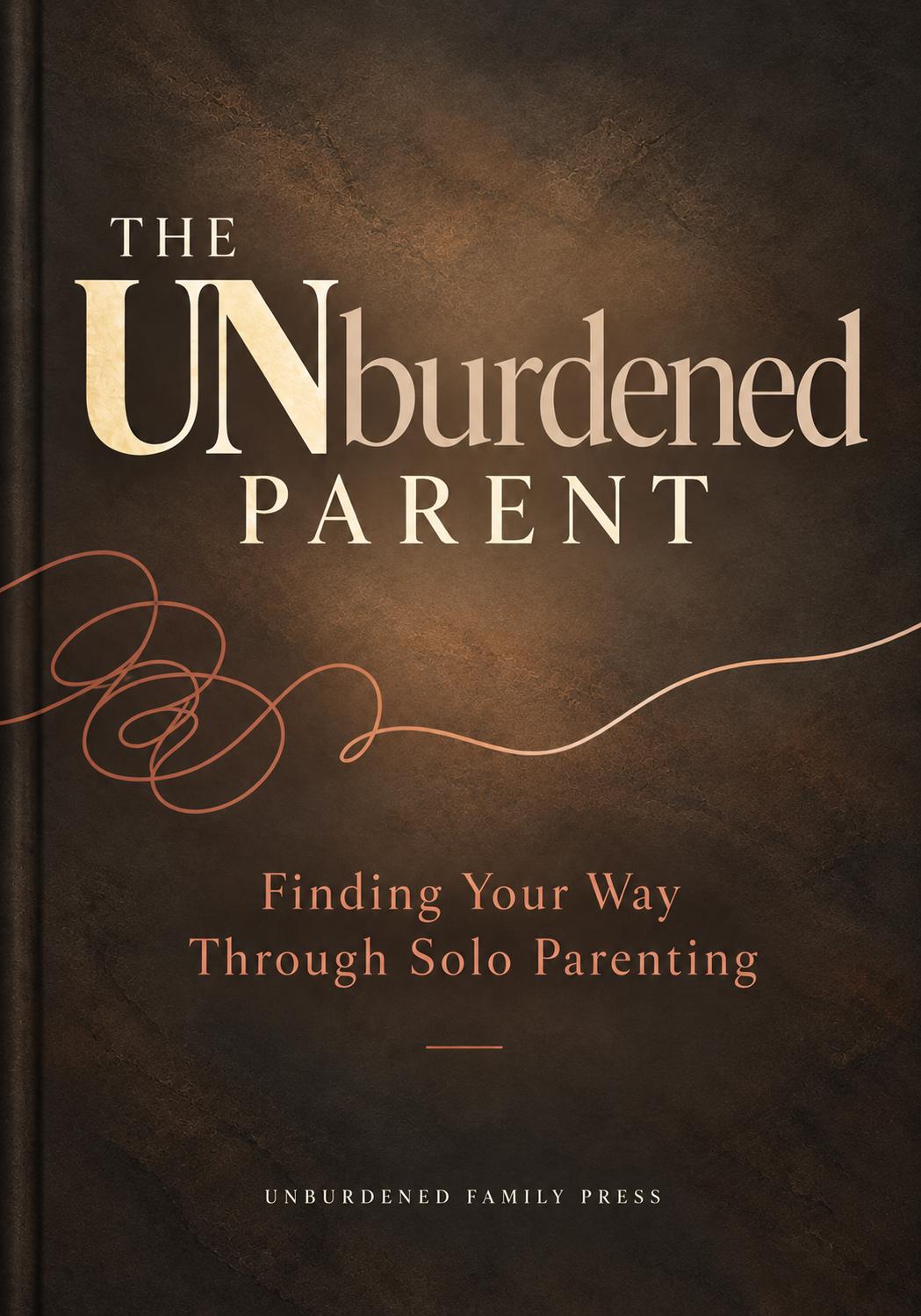
The Unburdened Parent · Current title
The Unburdened Parent: Finding Your Way Through Solo Parenting is a reflective and practical parenting resource for those navigating a season of solo parenting. It offers lived understanding, usable tools, gentle reflection and practical support without requiring the reader to have everything figured out.
The book
Finding Your Way Through Solo Parenting is the first title in the Unburdened Parent series. It is designed to be useful even on the days when a reader does not have the energy to write, plan or turn an experience into a lesson.
The book destination will be connected here when the revised edition is ready.
Book link to followAlongside the book
A small, purposeful set of resources for planning, reflection, connection and replenishment. Each destination will become active only when the resource genuinely exists.
See the whole break, notice the gaps and plan only the cover you need.
Optional reflection resources for readers who want extra space to pause, notice and think more deeply.
Quiet resources for the parent, and practical ideas for making room for family connection without adding another heavy demand.
A playful audio pause for the days when everybody needs something.
Listen to the audio previewForty simple, affordable ideas organised around the capacity you have today.
Browse connection ideasThe Unburdened Solo Parent Anthem · Audio Preview
Some days, everybody needs something.
The lunchbox gets forgotten. The school calls. Work wants more. Dinner receives reviews nobody requested. And just when the house finally goes quiet, the dishes are still sitting there.
OH NO! OH NO! is a playful song for those days.
Put it on. Move if you want to. Laugh if you can.
For three minutes, the world can wait.
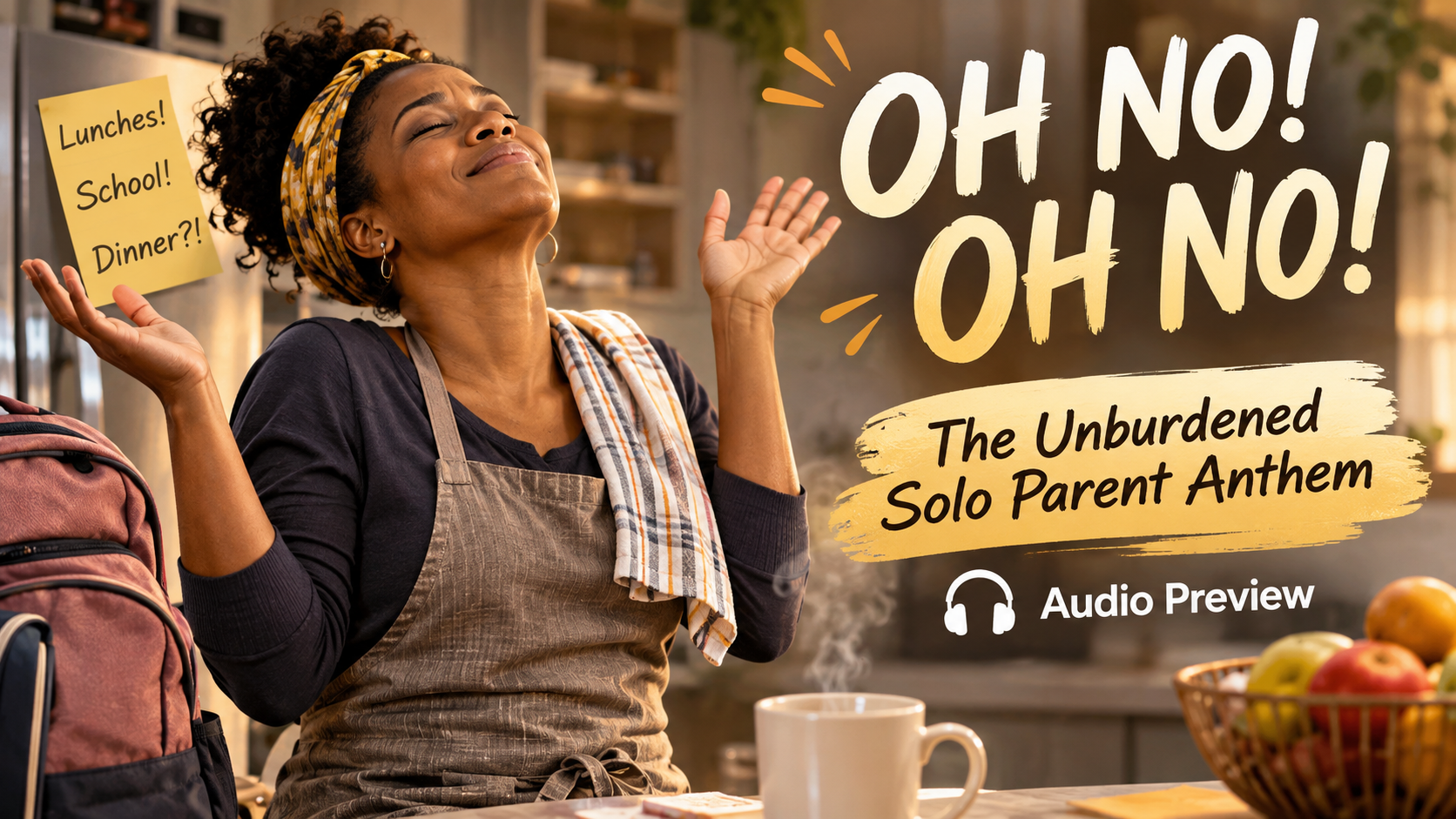
This is an early audio version of the Unburdened Solo Parent Anthem. A finished visual edition is currently being developed.
A quiet check-in for a solo parenting season.
What Am I Carrying? creates a little space to notice what is taking up room, distinguish what can and cannot shift, consider what a child may be carrying too, and identify where support or protection may matter most.
Readers may write through the whole five-page bundle, use only one page, circle a few things or simply read.
This is an optional companion to The Unburdened Parent: Finding Your Way Through Solo Parenting—not homework, a programme or something that needs to be completed.
Low-Cost Connection Ideas
Some of the moments children remember most are surprisingly ordinary: eating somewhere unusual, walking without rushing, being allowed to choose the music, laughing over something small, or having your full attention for ten unhurried minutes.
This collection is here for days when you would like to connect but do not necessarily have much time, money or creative energy to spare.
You do not need to work through the list.
Choose what fits the family you have and the capacity you have today.
Small things still count.
Put an ordinary meal or snack on a blanket on the floor.
Nothing special needs to be cooked. The change of location is the event.
Let someone choose two songs.
Dance, sing, sway, perform badly or simply listen together while clearing up.
When the second song finishes, normal life resumes.
Open the photos on your phone.
Let your child choose three from the past year.
Ask:
“What do you remember about this?”
You may be surprised by what mattered to them.
Sit down together with something to eat.
No activity required.
Try one question:
“What was the most interesting part of your day?”
Interesting works better than good.
Let your child choose an episode of something they enjoy and watch it with them.
Not while scrolling.
Your attention is the activity.
Walk to the end of the road, around the block or wherever ten minutes permits.
No destination necessary.
Turn off the main lights.
Use a lamp, fairy lights or a torch and sit together for a while.
Children often talk differently when the atmosphere changes.
Hand over control of the playlist during dinner preparation, a school run or tidying.
The only rule:
Everyone else has to give the choice a fair hearing.
Yes, even that song.
Blankets. Cushions. Floor.
Build something approximately tent-shaped and declare the living room temporarily unavailable for normal use.
Use food already in the house.
Try three varieties of apple, crackers with different toppings, fruit combinations, sauces or whatever makes sense.
Score them dramatically.
Create unnecessarily serious categories.
Ask your child to teach you something they know.
A game.
A dance.
A drawing technique.
Football trivia.
How their favourite app works.
Your job is to be genuinely teachable.
Choose an old family photograph.
See how many details everyone can work out:
Where were we?
How old were you?
Who took the photo?
What happened just before or afterwards?
Stories tend to arrive.
Give everyone paper and a challenge:
Engineering standards may be questionable.
That is permitted.
Hide several ordinary objects or write a few simple clues.
Older children can create the hunt for younger ones.
Do not cook an entire ambitious meal.
Choose one thing:
pancakes
popcorn
smoothies
flatbread
fruit skewers
muffins
pizza toppings
hot chocolate
One shared task is enough.
Dessert first.
Breakfast for dinner.
Eat on the floor.
Let everyone choose one harmless rule to reverse.
Ordinary routines become surprisingly entertaining when mildly rearranged.
Give everyone a mission.
Find:
Nobody has to borrow anything.
Take photographs around your neighbourhood based on a theme:
things that are red
interesting doors
tiny things
signs of the season
something beautiful nobody else noticed
Compare your finds afterwards.
Bring a snack from home.
The snack turns an ordinary playground visit into an outing without requiring an outing-sized budget.
Walk until you find somewhere worth sitting.
Rate benches according to whatever standards your family considers important:
view
comfort
people-watching
squirrel activity
snack suitability
Check roughly when the sun will set and go somewhere nearby where you can see the sky.
No photography required.
Just arrive.
Libraries, community centres, museums, faith communities, parks and local organisations often host free activities.
Choose these because they genuinely interest your family, not because every free event must become an educational opportunity.
Take a route you normally pass but never walk.
Let the children decide left or right at safe junctions.
The objective is simply to notice somewhere familiar differently.
Pack something simple and take it to:
a park
the garden
a bench
the waterfront
a playground
a patch of grass
Sometimes connection needs a change of scenery more than an activity.
Solo parenting can make one-to-one time difficult, especially with several children. It does not have to mean an expensive individual outing.
Take one child along when circumstances allow.
Let the errand become your time together.
Talk in the car.
Let them help choose something.
Share a small snack.
Ordinary life counts.
Say:
“I have fifteen minutes and they are yours. What shall we do?”
Within reasonable limits, follow their lead.
A short period of undivided attention can feel much larger to a child than the clock suggests.
Invite one child to sit with you after the others are occupied or asleep.
No agenda.
Sometimes the invitation itself opens the conversation.
One child chooses the vegetable, side dish, dessert or music.
Next time, someone else gets the turn.
Ask about something currently occupying their world.
Do not interrogate.
Let them explain.
If another responsible adult is available for the other children, take one child for a quick walk around the block.
The smallness is part of what makes it repeatable.
Connection does not suddenly require a formal conversation because your child got taller.
Each of you chooses two songs.
Play them properly.
No mocking the other person's choices.
Questions are allowed.
Ask:
“Show me something you have been into lately.”
It might be a video, creator, game, drawing, meme, hobby, sport or idea.
Let them curate the ten minutes.
Older children often become conversational after younger siblings and daytime demands have quietened.
Tea, toast, fruit, popcorn or whatever is around can create a natural little meeting place.
Walk beside each other.
You do not have to use the opportunity to ask about school, friendships, future plans and emotional wellbeing before reaching the first corner.
Leave some room.
Choose something neither of you needs to be brilliant at:
rearrange a shelf
make a playlist
plant something
repair something
plan a meal
organise photographs
try a recipe
build something simple
Conversation often appears while hands are occupied.
Watch, read, play or listen to something your older child recommends.
The message underneath is simple:
What interests you is worth some of my attention.
Sometimes there genuinely is no spare hour. Connection can still hide inside what already has to happen.
Choose one light question for the journey:
What made you laugh today?
What was weird today?
Who surprised you?
What would you delete from today if you could?
Not every journey needs a question.
Silence is allowed too.
Fold laundry together.
Pair socks badly.
Talk.
You were going to deal with the laundry anyway.
If you are cooking, invite a child to sit nearby rather than requiring them to help.
Company counts even when nobody is learning knife skills.
When everyone is frayed, put on one song and reset one room together.
Stop when the song ends.
Do not accidentally turn connection time into a 47-minute cleaning operation.
A difficult financial season does not mean childhood has to become emotionally colourless.
Look first at what is already available:
A child does not need every shared moment to contain a purchase.
Sometimes the thing that changes the day is simply: “Come with me.”
Print the one-page What Can We Manage Today? menu.
Watch / Listen
A short reading from The Unburdened Parent: Finding Your Way Through Solo Parenting
The House Can Feel Different is a short reading from Finding Your Way Through Solo Parenting, reflecting on the subtle ways family life can feel different when one parent is away, and how ordinary rhythms gradually begin to return.